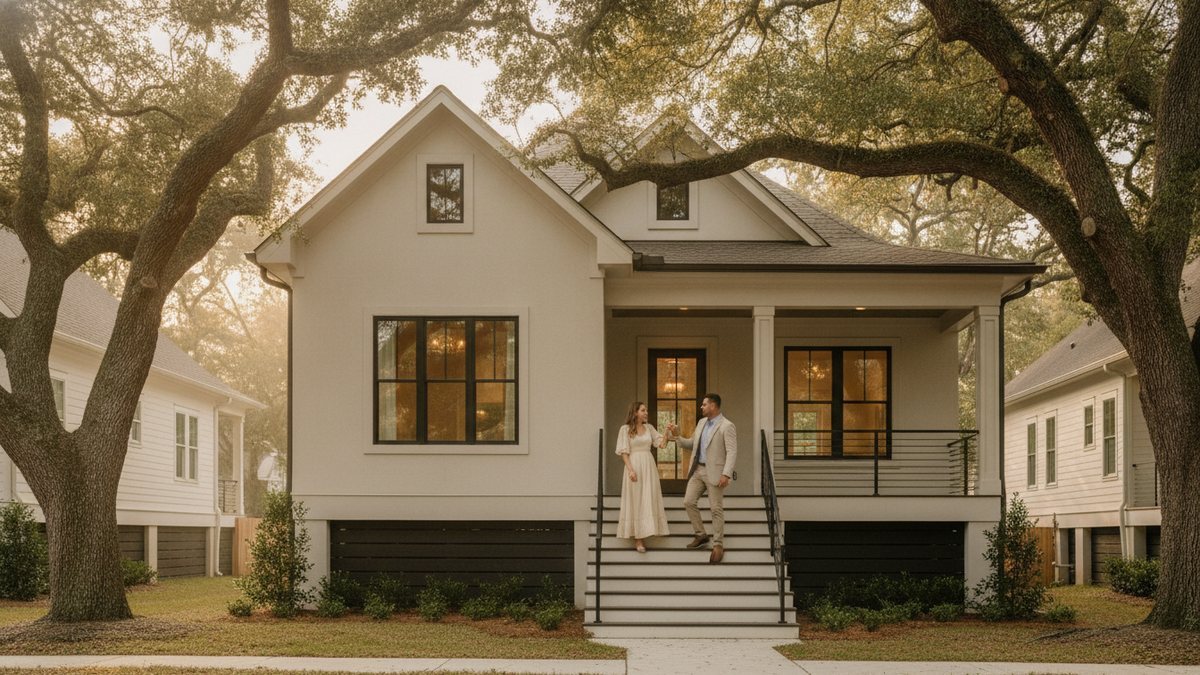
How do I finance a modular home without guessing wrong?
A modular home is usually financed like a site-built home if it meets permanent foundation and code rules. The real fix is to confirm property classification early, then match the loan to the borrower, land, and appraisal facts before you write offers or order plans.
Related Questions People Ask Next
What is a modular home in mortgage terms?
In mortgage terms, a modular home is a factory-built home that is assembled on a permanent site and usually financed like a traditional house if the property and foundation meet lender requirements.
What does permanent foundation mean for a modular home buyer?
It means the home is attached to a compliant foundation in a way that lets the lender treat it as real property. Without that, the loan options can narrow fast and appraisal problems can follow.
Can you use FHA for a modular home?
Yes, if the home meets FHA property standards, the foundation is acceptable, and the rest of the file qualifies. The lender still has to verify the property type correctly.
Is modular home financing different from manufactured home financing?
Yes. That distinction matters a lot. Modular homes are often treated like site-built homes, while manufactured homes follow different rules and can require a different loan path entirely.
Who can help me compare modular home loan options?
A mortgage broker can compare FHA, VA, USDA, and conventional options across multiple lenders instead of forcing one bank’s box. PierPoint Mortgage LLC can help you sort the file before it gets messy.
How do lenders view a modular home?
The lender does not care about the sales brochure. It cares whether the home is legally and physically treated like real property, and that starts with classification, foundation, and how the home will be permanently attached.
If you are buying a modular home, the first step is to stop using the word like it solves everything. It does not. What matters is whether the home is modular rather than manufactured, because that changes the loan rules, appraisal approach, and acceptable collateral.
In a modular home loan, lenders usually want proof that the home meets local building code, is set on a permanent foundation, and will be titled as real property. That is why buyers get stuck when the land, installation plan, or permit trail is vague.
The common mistake is assuming “factory-built” means “the same loan either way.” It is not. A modular home can often follow conventional, FHA, VA, or USDA paths, but only if the file supports the property type from the start.
Once the classification is clear, the rest gets more predictable. You can compare down payment, mortgage insurance, occupancy rules, and appraisal standards without guessing which bucket the home falls into.
- Confirm whether the property is modular, not manufactured
- Check for permanent foundation requirements early
- Treat land and home together when the home will be affixed
- Expect the appraisal to reflect the finished real property, not a kit
Can FHA, VA, or conventional loans be used for a modular home?
Yes, often it will, but the better question is which loan type matches the property details and your file. That is where buyers save themselves from pointless back-and-forth with the lender.
For many first-time buyers, FHA is the practical starting point because it can be more flexible on credit and down payment. If the modular home qualifies as real property and the appraiser can support the value, FHA can be a solid fit.
Conventional can work well too, especially when the borrower has stronger credit, enough cash, or wants to avoid mortgage insurance structures that feel less favorable. The catch is that conventional underwriting will still want the property to be classified correctly.
VA can be excellent for eligible service members and veterans because the zero-down structure is powerful, but the home still has to pass property and foundation standards. VA does not ignore the property file just because the borrower qualifies.
USDA may also be available in eligible rural areas, but again, the location, property type, and lender overlays matter. A modular home does not automatically belong in one lane. It depends on the actual file, not the label on the listing.
- FHA can help when flexibility matters more than a large down payment
- Conventional may suit stronger borrowers who want broader long-term options
- VA is strong for eligible veterans and service members
- USDA depends on location and property eligibility, not just home style
- The right choice depends on borrower profile plus property facts
What must the appraisal show for a modular home?
The appraisal has to prove the home is not just a structure, but a finished, financeable property. That sounds obvious. It is exactly where modular files get delayed when the lender, appraiser, and builder are not aligned.
The appraiser is not grading the floor plan. They are confirming value, marketability, and whether the home matches the property type the lender expects. If the modular home is not described correctly, the file can get pulled into review.
Land value matters if the borrower owns the lot or is buying land and home together. So do comparable sales, because the appraiser needs support from similar properties, not wishful thinking about what a builder promised.
Buyers also get tripped up by incomplete installation status. If the home is still under construction or not yet permanently affixed, the appraisal may need additional documentation or a different timing strategy.
The cleanest files are the ones where the lender knows exactly what will exist at closing, not just what is planned. That reduces surprises, redraws, and last-minute condition requests that no first-time buyer wants to explain twice.
- The appraisal must support the finished real property value
- Comparable sales need to match the actual property type as closely as possible
- Land ownership or land purchase affects the loan file
- Incomplete installation can trigger extra documentation
- Clear property classification prevents avoidable underwriting delays
How do the land, foundation, and title affect modular home approval?
This is where people overcomplicate the process and still miss the important part. The lender wants to know whether the home and land are tied together legally, physically, and for underwriting purposes.
A modular home is much easier to finance when the lot situation is clean. If you own the land, are buying it, or are rolling it into the construction or purchase structure, the lender needs that path documented from the outset.
Foundation status is non-negotiable. Permanent foundation language, installation details, and permit records can all affect whether the property is treated as real estate and whether the lender is comfortable proceeding.
Title also matters because some files begin life as personal property or a construction-related setup before conversion to real property. That transition has to be handled correctly, or the closing attorney and lender can end up waiting on each other.
For first-time homebuyers, this is the area where a good loan setup saves the most grief. If the land, title, and foundation are mapped correctly early, the rest of the file usually behaves better.
- Clarify whether the land is already owned or being purchased
- Verify permanent foundation requirements before underwriting
- Confirm how title will be held at closing
- Check whether the property is treated as real estate or still in transition
- Coordinate construction, legal, and lender paperwork early
Why buyers confuse financing for modular and manufactured homes
Because the homes can look similar from the street, and that is exactly how people end up in the wrong loan conversation. The lender, however, does not price by curb appeal.
This confusion is one of the most common reasons modular buyers hear conflicting answers. A factory-built home on a permanent foundation is not automatically the same thing as a HUD-code manufactured home, and lenders do not treat those files interchangeably.
If the property is manufactured, the loan path can change. If it is modular, the lender may be able to use more conventional mortgage products, assuming the appraisal and property records line up.
That distinction is especially important when a buyer is comparing down payment, mortgage insurance, and long-term resale expectations. The wrong assumption can push someone toward the wrong product or cost them time getting re-underwritten.
A buyer should not have to become a property code expert just to get a mortgage. But you do need a lender or broker who knows when a file belongs in the modular lane and when it absolutely does not.
- Appearance can mislead, property code does not
- Manufactured and modular homes are not financed the same way
- The title, foundation, and code path decide the loan category
- Wrong classification causes delays and bad product matches
- Clear labeling protects the buyer from avoidable rework
What first-time buyers should check before signing for a modular home
If you are buying your first place, the real win is not just finding an affordable house. It is making sure the financing does not break after you fall in love with the property.
Before you sign, ask what the property will be called in the loan file, whether the foundation plan is already acceptable, and whether the lot situation is clean. Those three questions eliminate a lot of expensive confusion.
You should also ask which loan options fit your down payment, credit, and occupancy plans. Some buyers are better served by FHA first. Others are ready for conventional. Veterans may want to review VA. The point is to compare, not assume.
If the home is in a rural area, USDA may deserve a look. If the property is unusual, an experienced mortgage broker can tell you quickly whether the file belongs in a standard product or needs a more specialized path.
The buyer who wins here is the buyer who confirms the rules before deposit deadlines start pressuring everyone. That is not overthinking. That is simply how you avoid financing surprises on a property type that already has extra moving parts.
- Ask how the lender will classify the property
- Check foundation and title details before going under contract
- Compare FHA, VA, USDA, and conventional early
- Do not assume a lower-priced factory-built home is easier to finance
- Use the contract period to verify the loan path
When a modular home file needs a lender who can sort the structure from the story
DIY financing versus using PierPoint Mortgage LLC
Frequently Asked Questions
Usually yes, because modular homes are often treated more like site-built homes when they meet code and permanent foundation rules. Manufactured homes follow a different set of lending requirements, so the classification matters before you compare rates or programs.
Often, yes. If the home is properly classified, the foundation is acceptable, and the rest of the borrower profile fits, conventional financing can be a strong option. The lender still has to approve the property details, not just the borrower.
Not necessarily. Down payment depends more on the loan type and borrower profile than on the word modular by itself. FHA, VA, USDA, and conventional all have different structures, so the right answer comes from the full file, not a guess.
The cost depends on the loan type, credit, down payment, property details, and market conditions, so there is no honest one-size-fits-all number. If you want a real estimate for your situation, book a call and get a quick quote.
Yes. If you want help comparing FHA, VA, USDA, and conventional options for a modular home, PierPoint Mortgage LLC can review the property details and lender fit with you before you make a costly mistake.
About Shannon Swartz
Owner, President and CEO, PierPoint Mortgage
Shannon Swartz is the Owner, President and CEO of PierPoint Mortgage and a licensed mortgage broker (NMLS #112844) with more than 31 years in the mortgage industry. PierPoint, founded in 2003 and licensed in 15 states with 20 locations, works with more than 100 wholesale lenders to offer every product known to the mortgage industry, from conventional, FHA, VA and USDA loans to jumbo, DSCR, bank statement, reverse and other specialty programs.
Ready to Get Pre-Approved?
See what you may qualify for with more than 100 wholesale lenders competing for your rate across every product known to the mortgage industry.
Get a Free Consultation